Cavetown
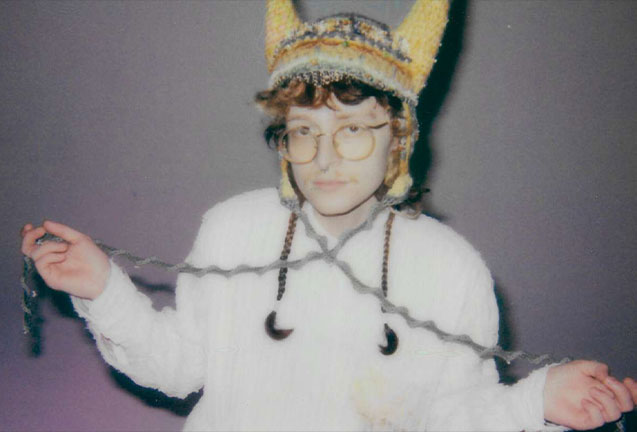
Cavetown's Robin Skinner, of Cambridge, England, has become an anchor for
a generation of listeners who've found not just solace in his music, but a kind
of spiritual room to grow up in. His catalog, spanning lo‑fi ditties and indie
rock charmers, has amassed billions of streams, earned a 6× Platinum certification,
and inspired high-profile features in the New York Times, Rolling Stone and
Billboard. His global touring career has taken him from sold‑out clubs to
massive tours with AJR and Pierce The Veil, as well as festival main stages at
Glastonbury, Lollapalooza, Corona Capital, Primavera Sound, and many more.
Along the way, his songs have become comfort objects to his dedicated fans, who
have clasped them, cried to them, and grown up alongside them. They've been
soft hands offering understanding when the world felt too sharp.
His new album, Running
With Scissors, asks: What happens when you leave that room you grew up in
and finally look yourself squarely in the eye? What are the gifts and curses
you've inherited from the family who raised you? Which parts of them do you
bring forward, and which do you cut away? With all these lessons and questions
in tow, Running With Scissors
captures life at the moment you're forced out of the classroom into the open
world, scissors in hand, trying not to fall.
Written on the other side of an intensive two‑year
healing process, Running With Scissors
finds Skinner aged up and galvanized. That bravery extends to the songwriting
itself: the album is threaded with intergenerational tension, familial
excavation, and an unflinching exploration of who Skinner wants to become as an
adult. These questions were prompted by two major life events: falling in love
with the person he wants to start a family with, and the birth of his first
sibling, who is 26 years his junior.
The relationship that inspired love-dazed opener
'Skip' is the album's brightest throughline, a song Skinner calls "one of the
first love songs I've written with positive overtones...because I've fallen in
love for real this time." In its bounce and candor, the track channels the joy
of "wanting to skip around, like you're a little kid." But Running With Scissors doesn't linger in any one emotional register
for long. As "Skip" ends, its final chord dovetails directly into the darker,
more jagged opening of "Cryptid," where love transforms into righteous fury.
"Something new I'm bringing into this album is spite," Skinner says. "I think I
owe it to love to realize how much I care about things...This song is where those
two feelings meet."
The songs embrace this tension between love and anger:
whispers break into screams, warm arpeggios bounce off sinister basslines,
acoustic melodies and nature‑based field recordings collide with hyperpop
glitches and math rock. Most noticeably, Skinner's newfound sense of righteous
anger has unlocked new parts of his voice. Where it was once a soft stream,
Skinner's vocal now stretches and snaps with wild abandon and enormous range,
the result of recent vocal coaching and deeper emotional excavation. "I wanted
to make myself sound more brave," he says, "and I wanted to impress people with
my voice, like, 'wow, he's actually got some pipes.'"
That same sense of upheaval runs through Skinner's
career. After years with Warner Records, he has joined Futures Music Group,
further underlining this period of renewal. The album also marks a major
creative milestone: for the first time in his career, Skinner invited
collaborators into the core creative process. Running With Scissors features contributions from Chloe Moriondo,
Ryan Raines, David Pramik, Couros, and Underscores, artists who've helped
expand Skinner's sonic palette in unexpected and vitalizing ways, pulling the
carpet from underneath his long-entrenched universe, and making it fly.
At every turn, Running
With Scissors marks a clear evolution in artistry and maturity for Skinner.
Love songs like "Baby Spoon" explore care, intimacy and softness in the wild
dance with masculinity. Elsewhere, "No Bark, No Bite" turns extra angsty and
inward, examining family history with the curiosity of someone considering
their potential future as a parent and raising a family of his own, for the
first time. "I've been reflecting on the traits I've picked up from my
parents," he says, "and thinking about which of those parts I want to take into
adulthood and which parts I want to discard for the future of myself, my
partner, and our future family."
Aged up and showing up as the best version of himself,
Skinner hasn't lost sight of the millions of listeners who have grown up
alongside him. "I want them to enter this new era with me and not feel like
it's for kids. Because I'm not a kid anymore," he says. "I want it to feel like
we're moving forward together."